January 5, 2026
LINK TO ARTICLE: https://shuttersportsmedia.ca/news/f/how-heated-rivalry-empowers-sports-fans-to-be-themselves
Move over, Shoresy; there’s a new iconic Canadian hockey show in town.
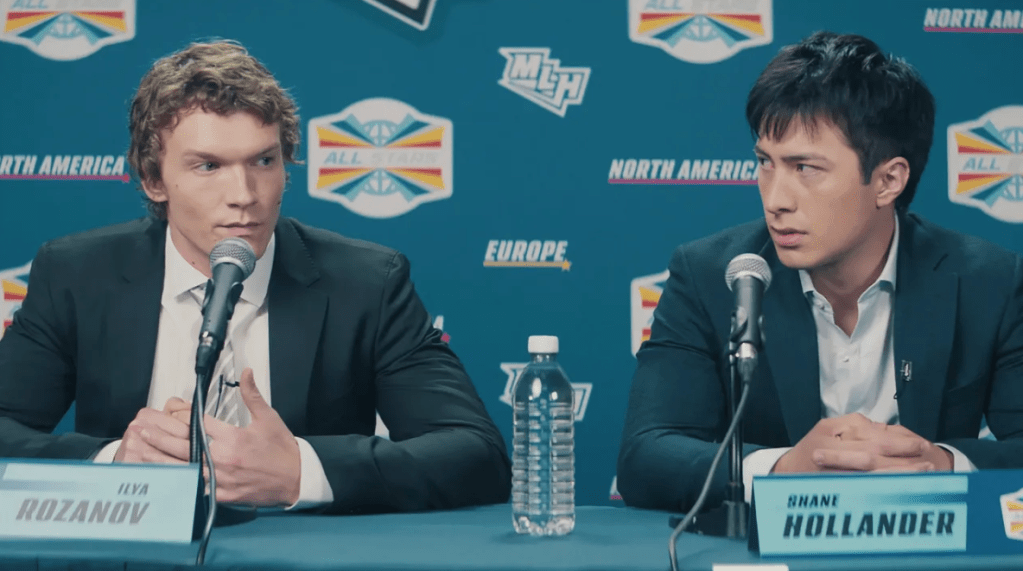
Heated Rivalry is the latest pop-culture phenomenon sweeping the internet. The Crave Original series, which premiered in late November, follows the fierce rivalry between two elite hockey players that quickly turns into a secret and passionate love affair.
Despite hockey being used as a backdrop to the steamy romance, Heated Rivalry has received praise from sports enthusiasts and the LGBTQ+ community for its representation of an often-overlooked corner of the hockey fan base.
Simultaneously, the show has sparked meaningful conversations about queerness within the hockey community.
A Welcome Change
In a sport that is so dominated by toxic masculinity and heteronormativity, Heated Rivalry provides the breath of fresh air that many hockey fans have been seeking, as the NHL continues to face immense scrutiny and backlash for reinforcing hockey’s conservative culture.
Earlier this September, the league chose to reinstate the five players acquitted in the 2018 Hockey Canada sexual assault trial. In 2023, the league banned themed warm-up jerseys, including Pride jerseys, along with Pride tape, following player refusals and negative attention online surrounding Pride Night events.
The NHL quickly reversed the Pride tape ban due to backlash, but the warm-up jersey ban remains, undermining inclusivity efforts and sending a message that hockey is not for everyone.
This message is reversed throughout Heated Rivalry. The show highlights the aspects that give hockey its traditionalist reputation—homophobic language and heteronormative culture—and subordinates them to the main plot, revealing the more profound, and often overlooked, aspects of the sport and its athletes.
Living Authentically
As captain of the New York Admirals, Scott Hunter struggled with the potential consequences of coming out. Rooted in the real-world lack of visibly queer NHL players, Hunter feared that it would ruin his career and reputation as an All-American leader—something many NHL players presumably still feel.
The constant need to hide his true self, coupled with his desire for a genuine connection, left Hunter feeling isolated and lonely. With many of his teammates going home to wives and families, Hunter yearned for a partner of his own that he could confidently show off.
His relationship with Kip Grady changes everything, forcing Hunter’s identity struggle to a breaking point and pushing him to confront his fears and live an authentic life.
After years of hiding and internal deliberation, Hunter decides to come out publicly following a successful season for the Admirals. After winning the Stanley Cup on home ice, Hunter sees the other players celebrating with their wives and decides to call Grady down to the ice.
In a beautiful declaration of love and identity, Hunter and Grady share a kiss to celebrate this tremendous moment, signifying his decision to live authentically.
After winning the MVP award that same year, Hunter took this opportunity to deliver a beautifully written speech regarding his experiences:
“When I was a teenager, when it started to look like a career in hockey was a real possibility, two things happened. One was that my mother died. The other was that I began to realize that I might be that thing that every hockey player liked to throw around as an insult. The kind of language I heard on the ice and in the locker room every day was a constant reminder that I was different. Maybe it made me a better player. Maybe it gave me another reason to prove myself. But it also made me terrified that someone would find out my secret.” – Hunter, Game Changer (2019).
Hunter’s decision was also a significant catalyst for other characters, helping Shane Hollander and Ilya Rozanov feel more comfortable with their identities, as well as their relationship.
Hiding in Plain Sight
Hollander, who is from Ottawa, struggles with his sexuality and sense of self. The 18-year-old experiences significant internal conflict and anxiety, fearing that coming out as gay would end his career and shatter the expectations people have of him as the “golden boy” of Canadian hockey.
Rozanov, who is from Russia, is more confident with his identity and sexuality; however, the 18-year-old struggles with the differentiation of his private and public life. In public, Rozanov is seen as a “flashy ladies’ man” who is brash and cocky on the ice. In private, Rozanov feels the pressure to uphold his false persona and hide his relationship with Hollander, resulting in social isolation and emotional turmoil.
While maintaining his public “ladies’ man” persona, Rozanov is also concerned with how his national identity and sexuality will merge due to Russia’s anti-LGBTQ+ laws and societal disapproval. If Rozanov came out, he would never be able to safely return to his home country, leaving him to struggle with the painful reality of being rejected by his nation.
Pressured to hide their love from everyone, Hollader and Rozanov had to uphold their reputation as rivals while attempting to conform to a heteronormative agenda. To avoid suspicion from teammates and families, the couple used secret nicknames on their phones; Hollander went by the alias “Jane,” and Rozanov went by “Lily.”
Since Hollander and Rozanov are involved in such a hypermasculine environment, the slightest mishap could risk a dead giveaway and compromise their identities—a fear the two share. Mirroring Hunter’s concerns of what being outed would do to their reputation, the two spent the first decade of their romance sneaking around, meeting up in hotel rooms and at each other’s homes.
Watching Hunter come out sparked a hope in Hollander, Rozanov, and many other hockey players, both fictional and real. Having confirmation that they were not alone in their lifestyles, feelings and identities gave the pair the confidence that they needed to start their own journey and move their relationship from private to public.
Real World Impact
For Brock McGillis, the first men’s hockey player to publicly come out as gay, Heated Rivalry was both validating and traumatizing.
“I lived the show, and when I saw the first episode, it gave me a dose of PTSD,” McGillis said in an interview with Outsports. “I’ve been in therapy for twenty years, and I thought I was okay, and I started watching, and I was so triggered, I had to slam my laptop shut.”
While playing high-level hockey, McGillis was in a secret long-term relationship. Nobody knew, not even his own family.
“We had aliases for each other, just like [Hollander and Rozanov],” McGillis said. I had a fake name for him in my phone, a woman’s name. Somebody lifted my phone once, and I just thought ‘Oh, this is my life.’”
Despite the often-upsetting memories that Heated Rivalry induces, McGillis says the show is a fun and easily digestible way to understand the life of a closeted athlete.
“Instead of dark, heavy shows where people just see hate, [Heated Rivalry] shows the struggle in a way people can actually take in, because it’s sexy and funny,” McGillis said. “And that’s needed.”
Heated Rivalry doesn’t pretend to solve these problems; it simply tells a love story and sheds light on the lives of hockey players. But for McGillis, along with many others, the story feels almost entirely too real.
The conformity demanded in men’s sports remains dominant. While a simple TV show cannot change that, it has certainly sparked conversations around the importance of representation and visibility in the hockey community.
Although Heated Rivalry may not encourage players to come barrelling out of the closet, it succeeds in recognizing those who have been there for longer than they should be, and in creating a safe space where queer athletes and sports fans can unapologetically be themselves.
 Olivia Byrne's Media Portfolio
Leave a comment